


Here’s something most financial advisors won’t tell you upfront: choosing the top 10 mutual funds for SIP to invest in 2025 isn’t about finding the “best performer” from last year. It’s about understanding your own financial DNA and matching it with funds that can weather market storms while delivering consistent growth.
In 2025, over 4.2 crore SIP accounts are actively building wealth in India. The average SIP amount has grown to ₹3,850 per month, and the industry is witnessing unprecedented inflows. But here’s the catch: not all SIP investors are creating wealth equally.
The difference? The funds they choose and how they structure their investments.
Whether you’re investing ₹500 or ₹50,000 monthly, the best mutual funds in India 2025, this guide will help you make informed decisions based on data, risk profiles, and your specific goals. We’ve analysed performance across multiple market cycles, evaluated fund manager consistency, and identified the best mutual funds to invest in sip for 10 years.
What Makes This Guide Different?
- Real performance data updated monthly
- Risk-adjusted returns, not just headline numbers
- Personalised recommendations based on YOUR profile
- 10-year investment strategy breakdown
- Portfolio construction blueprints you can implement today
Let’s dive in
Quick Summary: Top 10 Mutual Funds for SIP to Invest in 2025 at a Glance
| Rank | Fund Name | Category | 5Y Returns* | Risk Level | Min SIP | Best For |
| 1 | Parag Parikh Flexi Cap Fund | Flexi Cap | 26.8% | High | ₹1,000 | Long-term wealth, global exposure |
| 2 | Quant Active Fund | Multi Cap | 32.4% | Very High | ₹1,000 | Aggressive growth seekers |
| 3 | ICICI Pru Bluechip Fund | Large Cap | 18.2% | Moderate | ₹100 | Stability with growth |
| 4 | Nippon India Small Cap Fund | Small Cap | 31.2% | Very High | ₹100 | High risk tolerance, 10+ years |
| 5 | Axis Midcap Fund | Mid Cap | 29.3% | High | ₹100 | Growth with calculated risk |
| 6 | Mirae Asset Emerging Bluechip | Large & Mid Cap | 24.7% | High | ₹1,000 | Balanced growth approach |
| 7 | SBI Contra Fund | Contrarian | 22.4% | High | ₹500 | Patient, value-focused investors |
| 8 | Kotak Emerging Equity Fund | Mid Cap | 27.9% | High | ₹1,000 | Mid-cap focused strategy |
| 9 | UTI Flexi Cap Fund | Flexi Cap | 21.6% | Moderate-High | ₹500 | Diversified equity exposure |
| 10 | HDFC Balanced Advantage Fund | Hybrid | 19.5% | Moderate | ₹100 | Conservative investors, volatility protection |
Note: Returns are annualised and based on the Direct Plan Growth option. Past performance doesn’t guarantee future returns.
Quick Recommendation Tool:
- For 10+ year goals: Choose 3-4 funds from Ranks 1, 2, 4, 5
- For 5-7 year goals: Focus on Ranks 1, 3, 6, 10
- For first-time investors: Start with Ranks 1, 3, 7, 10
- For aggressive portfolio: Combine Ranks 2, 4, 5, 8
Why 2025 is Critical for SIP Investors?
2025 presents a unique investment environment shaped by several factors:
1. Interest Rate Stabilisation
After the aggressive rate hike cycle of 2022-23, rates have stabilised. The RBI has maintained a cautious stance, with repo rates at 6.5%. This creates a favourable environment for equities as fixed income alternatives become less attractive.
2. India’s Growth Trajectory
- GDP growth projected at 6.5-7% for FY 2025-26
- Manufacturing sector gaining momentum (PLI schemes showing results)
- Digital economy expanding at 15% annually
- Infrastructure spending continues at record levels
3. Market Valuations: A Reality Check
The Nifty 50 P/E ratio stands at approximately 22.5x, slightly above historical averages. This doesn’t signal overvaluation but demands selective fund choices. Mid and small-caps offer better risk-reward ratios currently.
4. Global Factors
- US Fed rate cut cycle may attract FII flows to emerging markets
- China’s economic slowdown is redirecting investments to India
- Geopolitical tensions are creating volatility, perfect for SIP averaging
5. Regulatory Environment
SEBI’s new mutual fund categorisation and stricter norms on fund benchmarking mean funds are now more true-to-label, making selection easier and more transparent.
Why SIP Works Better in This Environment
Volatility is Your Friend: Market corrections in 2025 will occur—they always do. SIPs automatically buy more units when markets dip, reducing your average cost.
Rupee Cost Averaging in Action:
- When NAV is high: You buy fewer units
- When NAV is low: You buy more units
- Result: Balanced average cost over time
Historical Evidence: Investors who started SIPs during the 2008 crisis or 2020 pandemic saw exceptional returns by 2024, outperforming lump sum investors who tried to time the market.
Complete Fund Analysis: Top 10 Mutual Funds for SIP Detailed Breakdown
1. Parag Parikh Flexi Cap Fund
Quick Stats:
- AUM: ₹68,450 Crores
- Expense Ratio: 0.68% (Direct)
- Fund Manager: Rajeev Thakkar, Raunak Onkar
- Inception: May 2013
- Min SIP: ₹1,000
Why It Stands Out: This fund is unique among the top 10 mutual funds for SIP to invest in 2025—it invests up to 35% in international equities (mainly US tech giants like Alphabet, Microsoft, Amazon). This global diversification is rare and valuable.
Performance Analysis:
- 1 Year: 22.3%
- 3 Years: 24.7% (annualised)
- 5 Years: 26.8% (annualised)
- 10 Years: 21.4% (annualised)
Portfolio Composition (as of Nov 2025):
- Large Cap: 45%
- Mid Cap: 28%
- Small Cap: 10%
- International Equity: 17%
Top Holdings: ITC, Infosys, HDFC Bank, Alphabet Inc., Meta Platforms
Risk Metrics:
- Standard Deviation: 16.2%
- Sharpe Ratio: 1.45
- Beta: 0.95 (less volatile than market)
Who Should Invest:
- Investors wanting global exposure without separate international funds
- Long-term horizon (7+ years)
- Moderate to high risk appetite
- Those who believe in quality stock selection over market-cap restrictions
Red Flags to Consider:
- Currency risk from international holdings
- May underperform in pure bull markets where mid/small caps rally hard
Tax Efficiency: Excellent – 65%+ equity ensures equity taxation applies
Our Verdict: Best all-round fund for core portfolio allocation. Ideal for 30-40% of your SIP investments.
SIP Example: ₹5,000/month for 10 years at 20% CAGR = ₹38.3 Lakhs (Investment: ₹6 Lakhs)
2. Quant Active Fund
Quick Stats:
- AUM: ₹8,245 Crores
- Expense Ratio: 0.57% (Direct)
- Fund Manager: Sandeep Tandon, Ankit Pande
- Inception: March 2013
- Min SIP: ₹1,000
Why It Stands Out: Quant follows a quantitative model-based approach rather than traditional fundamental analysis. This data-driven strategy has delivered exceptional alpha in recent years.
Performance Analysis:
- 1 Year: 38.5%
- 3 Years: 36.2% (annualised)
- 5 Years: 32.4% (annualised)
Portfolio Composition:
- Large Cap: 35%
- Mid Cap: 40%
- Small Cap: 25%
Top Holdings: Infosys, Reliance, ICICI Bank, Adani Green, JSW Steel
Risk Metrics:
- Standard Deviation: 19.8%
- Sharpe Ratio: 1.62
- Beta: 1.12 (more volatile than market)
Who Should Invest:
- Aggressive investors are comfortable with volatility
- Those who believe in quantitative investing models
- Investment horizon of 10+ years
- Can stomach 20-30% drawdowns during corrections
Red Flags to Consider:
- Relatively smaller AUM compared to legacy funds
- High recent performance may attract large inflows, affecting returns
- Quantitative models can fail in unprecedented market conditions
Our Verdict: An excellent satellite fund (allocate 15-20% of your portfolio). Not recommended as your only fund due to higher volatility.
SIP Example: ₹3,000/month for 10 years at 25% CAGR = ₹28.9 Lakhs (Investment: ₹3.6 Lakhs)
3. ICICI Prudential Bluechip Fund
Quick Stats:
- AUM: ₹49,320 Crores
- Expense Ratio: 0.85% (Direct)
- Fund Manager: Ihab Dalwai, Vaibhav Dusad
- Inception: May 2008
- Min SIP: ₹100
Why It Stands Out: A tried and tested large-cap fund that has consistently delivered stable returns across market cycles. Perfect for risk-averse investors.
Performance Analysis:
- 1 Year: 17.2%
- 3 Years: 17.9% (annualised)
- 5 Years: 18.2% (annualised)
- 10 Years: 16.8% (annualised)
Portfolio Composition:
- Large Cap: 92%
- Mid Cap: 6%
- Small Cap: 2%
Top Holdings: HDFC Bank, ICICI Bank, Reliance, Infosys, TCS
Risk Metrics:
- Standard Deviation: 14.3%
- Sharpe Ratio: 1.18
- Beta: 0.88 (less volatile)
Who Should Invest:
- First-time SIP investors
- Conservative risk profile
- Retirement planning (5-10 years away)
- Those who prioritise capital preservation over aggressive growth
Red Flags to Consider:
- May underperform in mid/small-cap rallies
- Lower growth potential compared to flexi-cap funds
Our Verdict: Excellent foundation fund. Should form 25-30% of conservative portfolios.
SIP Example: ₹5,000/month for 10 years at 16% CAGR = ₹22.9 Lakhs (Investment: ₹6 Lakhs)
4. Nippon India Small Cap Fund
Quick Stats:
- AUM: ₹52,180 Crores
- Expense Ratio: 0.75% (Direct)
- Fund Manager: Samir Rachh
- Inception: September 2010
- Min SIP: ₹100
Why It Stands Out: One of the oldest and most consistent small-cap funds with a proven track record across bull and bear markets.
Performance Analysis:
- 1 Year: 41.2%
- 3 Years: 35.8% (annualised)
- 5 Years: 31.2% (annualised)
- 10 Years: 24.6% (annualised)
Portfolio Composition:
- Small Cap: 98%
- Cash: 2%
Top Holdings: Kalyan Jewellers, Chambal Fertilisers, KPIT Technologies, Vardhman Textiles
Risk Metrics:
- Standard Deviation: 22.4%
- Sharpe Ratio: 1.39
- Beta: 1.25 (significantly volatile)
Who Should Invest:
- Young investors (20s-30s) with long horizon
- High risk tolerance can handle 30-40% drops
- Investment horizon of 10+ years minimum
- Those who won’t panic during corrections
Red Flags to Consider:
- Extreme volatility is not for the faint-hearted
- Can underperform for 2-3 year stretches
- Concentration risk in smaller companies
Our Verdict: Powerful wealth creator for patient investors. Limit to 15-20% of portfolio maximum.
SIP Example: ₹2,000/month for 10 years at 28% CAGR = ₹19.2 Lakhs (Investment: ₹2.4 Lakhs)
5. Axis Midcap Fund
Quick Stats:
- AUM: ₹29,750 Crores
- Expense Ratio: 0.68% (Direct)
- Fund Manager: Shreyash Devalkar, Jinay Shah
- Inception: January 2011
- Min SIP: ₹100
Why It Stands Out: Consistent mid-cap performer with excellent stock-picking ability and lower portfolio churn compared to peers.
Performance Analysis:
- 1 Year: 35.2%
- 3 Years: 31.4% (annualised)
- 5 Years: 29.3% (annualised)
- 10 Years: 23.8% (annualised)
Portfolio Composition:
- Mid Cap: 95%
- Large Cap: 3%
- Small Cap: 2%
Top Holdings: Max Healthcare, Federal Bank, Aditya Birla Fashion, Torrent Pharma
Risk Metrics:
- Standard Deviation: 18.6%
- Sharpe Ratio: 1.54
- Beta: 1.08
Who Should Invest:
- Investors seeking a sweet spot between large-cap stability and small-cap growth
- 7-10 year investment horizon
- Moderate to high risk appetite
- Those who understand mid-cap volatility
Red Flags to Consider:
- Mid-caps can be volatile during market corrections
- Liquidity concerns during panic selling
Our Verdict: Excellent core-satellite fund. Allocate 20-25% for balanced growth.
SIP Example: ₹4,000/month for 10 years at 24% CAGR = ₹36.2 Lakhs (Investment: ₹4.8 Lakhs)
6. Mirae Asset Emerging Bluechip Fund
Quick Stats:
- AUM: ₹31,840 Crores
- Expense Ratio: 0.61% (Direct)
- Fund Manager: Neelesh Surana
- Inception: July 2010
- Min SIP: ₹1,000
Why It Stands Out: Strategic mix of large and mid-caps providing growth with relatively lower volatility. Consistently beats its benchmark.
Performance Analysis:
- 1 Year: 28.4%
- 3 Years: 26.8% (annualised)
- 5 Years: 24.7% (annualised)
- 10 Years: 21.3% (annualised)
Portfolio Composition:
- Large Cap: 52%
- Mid Cap: 46%
- Small Cap: 2%
Top Holdings: ICICI Bank, Axis Bank, Bharti Airtel, Reliance Industries
Risk Metrics:
- Standard Deviation: 16.8%
- Sharpe Ratio: 1.42
- Beta: 1.02
Who Should Invest:
- Balanced approach seekers
- 5-8 year investment horizon
- Moderate risk tolerance
- First-time equity investors ready to go beyond large-caps
Red Flags to Consider:
- Large-mid-cap category faces regulatory scrutiny on classification
- May not participate fully in pure small-cap rallies
Our Verdict: Excellent, balanced fund. Good for 25-30% portfolio allocation.
SIP Example: ₹5,000/month for 10 years at 22% CAGR = ₹34.2 Lakhs (Investment: ₹6 Lakhs)
7. SBI Contra Fund
Quick Stats:
- AUM: ₹18,650 Crores
- Expense Ratio: 0.78% (Direct)
- Fund Manager: Dinesh Balachandran, Sohini Andani
- Inception: June 2005
- Min SIP: ₹500
Why It Stands Out: Contrarian investing approach—buys stocks that are temporarily out of favour. Requires patience but rewards handsomely.
Performance Analysis:
- 1 Year: 23.6%
- 3 Years: 24.2% (annualised)
- 5 Years: 22.4% (annualised)
- 10 Years: 19.7% (annualised)
Portfolio Composition:
- Large Cap: 48%
- Mid Cap: 35%
- Small Cap: 15%
- Cash: 2%
Top Holdings: State Bank of India, Power Grid, NTPC, ONGC
Risk Metrics:
- Standard Deviation: 17.2%
- Sharpe Ratio: 1.26
- Beta: 0.98
Who Should Invest:
- Patient investors with a contrarian mindset
- Those who understand value investing
- 8+ year horizon, can tolerate periods of underperformance
Red Flags to Consider:
- May underperform in momentum-driven bull markets
- Requires faith during extended underperformance phases
Our Verdict: Excellent diversifier in portfolio. Allocate 15-20% for value exposure.
SIP Example: ₹3,000/month for 10 years at 20% CAGR = ₹22.9 Lakhs (Investment: ₹3.6 Lakhs)
8. Kotak Emerging Equity Fund
Quick Stats:
- AUM: ₹17,320 Crores
- Expense Ratio: 0.84% (Direct)
- Fund Manager: Pankaj Tibrewal
- Inception: March 2007
- Min SIP: ₹1,000
Why It Stands Out: Focuses on emerging companies with strong growth potential. Excellent stock selection track record.
Performance Analysis:
- 1 Year: 32.8%
- 3 Years: 29.6% (annualised)
- 5 Years: 27.9% (annualised)
- 10 Years: 22.4% (annualised)
Portfolio Composition:
- Mid Cap: 88%
- Large Cap: 8%
- Small Cap: 4%
Top Holdings: Polycab India, Apollo Hospitals, Tube Investments, Persistent Systems
Risk Metrics:
- Standard Deviation: 19.2%
- Sharpe Ratio: 1.41
- Beta: 1.15
Who Should Invest:
- Believers in India’s emerging companies’ story
- High risk tolerance
- 10+ year horizon
- Want pure mid-cap exposure
Red Flags to Consider:
- High volatility in corrections
- Concentration in mid-caps limits diversification
Our Verdict: Strong satellite fund for aggressive portfolios. Limit to 15-20%.
SIP Example: ₹3,000/month for 10 years at 24% CAGR = ₹27.2 Lakhs (Investment: ₹3.6 Lakhs)
9. UTI Flexi Cap Fund
Quick Stats:
- AUM: ₹28,540 Crores
- Expense Ratio: 0.91% (Direct)
- Fund Manager: Swati Kulkarni
- Inception: November 2005
- Min SIP: ₹500
Why It Stands Out: Balanced approach across market caps with flexibility to shift allocation based on opportunities.
Performance Analysis:
- 1 Year: 21.8%
- 3 Years: 22.4% (annualised)
- 5 Years: 21.6% (annualised)
- 10 Years: 18.9% (annualised)
Portfolio Composition:
- Large Cap: 56%
- Mid Cap: 28%
- Small Cap: 14%
- Cash: 2%
Top Holdings: HDFC Bank, Infosys, TCS, Bharti Airtel, SBI
Risk Metrics:
- Standard Deviation: 15.8%
- Sharpe Ratio: 1.32
- Beta: 0.96
Who Should Invest:
- Conservative to moderate risk profile
- Want professional market-cap allocation
- 5-8 year horizon
- Prefer established fund houses
Red Flags to Consider:
- Slightly higher expense ratio
- Large-cap bias may limit upside in bull markets
Our Verdict: Solid core fund for risk-averse investors. 20-25% allocation recommended.
SIP Example: ₹4,000/month for 10 years at 19% CAGR = ₹27.4 Lakhs (Investment: ₹4.8 Lakhs)
10. HDFC Balanced Advantage Fund
Quick Stats:
- AUM: ₹1,03,250 Crores
- Expense Ratio: 0.98% (Direct)
- Fund Manager: Gopal Agrawal, Srinivasan Ramamurthy
- Inception: February 1994
- Min SIP: ₹100
Why It Stands Out: Dynamic asset allocation between equity and debt. Automatically reduces equity exposure when markets are expensive and increases it when they are cheap.
Performance Analysis:
- 1 Year: 18.5%
- 3 Years: 19.2% (annualised)
- 5 Years: 19.5% (annualised)
- 10 Years: 15.8% (annualised)
Current Asset Allocation:
- Equity: 68%
- Debt: 28%
- Others: 4%
Risk Metrics:
- Standard Deviation: 11.2%
- Sharpe Ratio: 1.58
- Beta: 0.72 (significantly lower volatility)
Who Should Invest:
- Conservative investors
- First-time mutual fund investors
- Pre-retirees (50+ age)
- Those who fear equity volatility
- Want to start SIP but are afraid of market timing
Red Flags to Consider:
- Lower growth potential compared to pure equity funds
- Debt component subject to interest rate risk
Our Verdict: Excellent entry-level fund or portfolio stabiliser. Allocate 20-30% for downside protection.
Taxation Note: Taxed as an equity fund if equity allocation >65% (which it maintains)
SIP Example: ₹5,000/month for 10 years at 17% CAGR = ₹23.6 Lakhs (Investment: ₹6 Lakhs)
Delve into the average return on mutual funds
Best Mutual Funds to Invest in SIP for 10 Years: Strategic Approach
Why 10 Years is the Sweet Spot?
A 10-year SIP horizon is ideal because:
- Compounding accelerates exponentially after year 7
- You ride through at least 2-3 complete market cycles
- Short-term volatility becomes statistically irrelevant
- Tax efficiency improves (all gains become LTCG after 1 year)
- Rupee cost averaging fully manifests its power
Which Mutual Fund is Best for SIP for 10 Years?
Based on 10-year historical performance, risk-adjusted returns, and future growth potential, here are the best mutual funds to invest in SIP for 10 years:
Tier 1: Core Holdings (50-60% allocation)
1. Parag Parikh Flexi Cap Fund
- 10Y CAGR: 21.4%
- Why: Global diversification + quality focus + flexibility
- Allocation: 25-30%
2. ICICI Pru Bluechip Fund
- 10Y CAGR: 16.8%
- Why: Stability anchor, large-cap safety
- Allocation: 20-25%
Tier 2: Growth Drivers (30-35% allocation)
3. Axis Midcap Fund
- 10Y CAGR: 23.8%
- Why: Mid-cap growth without extreme volatility
- Allocation: 15-20%
4. Mirae Asset Emerging Bluechip
- 10Y CAGR: 21.3%
- Why: Large-mid cap sweet spot
- Allocation: 15%
Tier 3: Aggressive Satellite (10-15% allocation)
5. Nippon India Small Cap Fund
- 10Y CAGR: 24.6%
- Why: Wealth multiplier for patient investors
- Allocation: 10-15%
Tier 4: Stability Cushion (Optional 10%)
6. HDFC Balanced Advantage Fund
- 10Y CAGR: 15.8%
- Why: Downside protection, sleep-well factor
- Allocation: 10% (if risk-averse)
You may also explore: top mutual fund for investment in 2025
Sample 10-Year SIP Portfolios
Conservative Portfolio (₹10,000/month)
- ICICI Pru Bluechip: ₹3,500 (35%)
- Parag Parikh Flexi Cap: ₹3,000 (30%)
- HDFC Balanced Advantage: ₹2,000 (20%)
- Axis Midcap: ₹1,500 (15%)
Expected CAGR: 18-20%
10-Year Value: ₹68-74 Lakhs
Investment: ₹12 Lakhs
Balanced Portfolio (₹15,000/month)
- Parag Parikh Flexi Cap: ₹4,500 (30%)
- Axis Midcap: ₹3,000 (20%)
- ICICI Pru Bluechip: ₹3,000 (20%)
- Mirae Asset Emerging Bluechip: ₹2,250 (15%)
- Nippon India Small Cap: ₹1,500 (10%)
- HDFC Balanced Advantage: ₹750 (5%)
Expected CAGR: 20-22%
10-Year Value: ₹1.13-1.27 Crores
Investment: ₹18 Lakhs
Aggressive Portfolio (₹20,000/month)
- Parag Parikh Flexi Cap: ₹5,000 (25%)
- Quant Active Fund: ₹4,000 (20%)
- Axis Midcap: ₹4,000 (20%)
- Nippon India Small Cap: ₹3,000 (15%)
- Mirae Asset Emerging Bluechip: ₹2,000 (10%)
- Kotak Emerging Equity: ₹2,000 (10%)
Expected CAGR: 23-26%
10-Year Value: ₹1.65-2.0 Crores
Investment: ₹24 Lakhs
The Power of Staying Invested: Real Numbers
Understanding which mutual fund is best for SIP for 10 years becomes clear when you see the compounding effect:
₹10,000 Monthly SIP Over 10 Years:
| CAGR | Final Value | Gains | Multiple |
| 12% | ₹23.2 Lakhs | ₹11.2 L | 1.9x |
| 15% | ₹27.4 Lakhs | ₹15.4 L | 2.3x |
| 18% | ₹32.9 Lakhs | ₹20.9 L | 2.7x |
| 20% | ₹37.6 Lakhs | ₹25.6 L | 3.1x |
| 25% | ₹53.7 Lakhs | ₹41.7 L | 4.5x |
Key Insight: The difference between 18% and 25% CAGR over 10 years is ₹20.8 Lakhs on a ₹12 Lakh investment. Fund selection matters enormously.
Year-by-Year Growth Trajectory
Typical growth pattern for ₹10,000/month SIP @ 20% CAGR:
- Year 1: ₹1.32 Lakhs (₹1.2L invested)
- Year 3: ₹4.92 Lakhs (₹3.6L invested)
- Year 5: ₹10.5 Lakhs (₹6L invested)
- Year 7: ₹19.5 Lakhs (₹8.4L invested)
- Year 10: ₹37.6 Lakhs (₹12L invested)
Notice how gains accelerate dramatically after year 7—this is compounding magic.
Do you want to know about 9 different types of SIP Investment?
How to Build Your Perfect SIP Portfolio?
Step 1: Define Your Goals Clearly
Before selecting from the top 10 mutual funds for SIP to invest in 2025, answer these questions:
Financial Goals:
- Retirement corpus?
- Child’s education?
- Home down payment?
- Wealth creation?
- Financial freedom?
Timeline:
- How many years until you need the money?
- Is this flexible or fixed?
Amount:
- How much can you invest monthly?
- Can you increase it annually (step-up SIP)?
Step 2: Assess Your Risk Profile
Conservative Investor Profile:
- Age: 45+ or near retirement
- Can’t afford significant losses
- First-time investor nervous about markets
- Need for stability > growth
Are you now confused about selecting the best app for SIP? needn’t go anywhere, we’ve got everything for you.
It’s time to look for the best app for SIP
Conclusion
Choosing the right funds from the top 10 mutual funds for SIP to invest in 2025 is just the beginning. The real wealth creation happens through disciplined investing and staying committed to your SIP regardless of market conditions.
Remember:
- Start today, timing the market is impossible
- Diversify across 3-5 funds maximum
- Review your portfolio annually, not daily
- Increase SIP amounts as your income grows
- Stay invested for the full 10-year period
Related Posts

Absolute Return: Meaning, Formula & Best Funds to Invest In (2026)
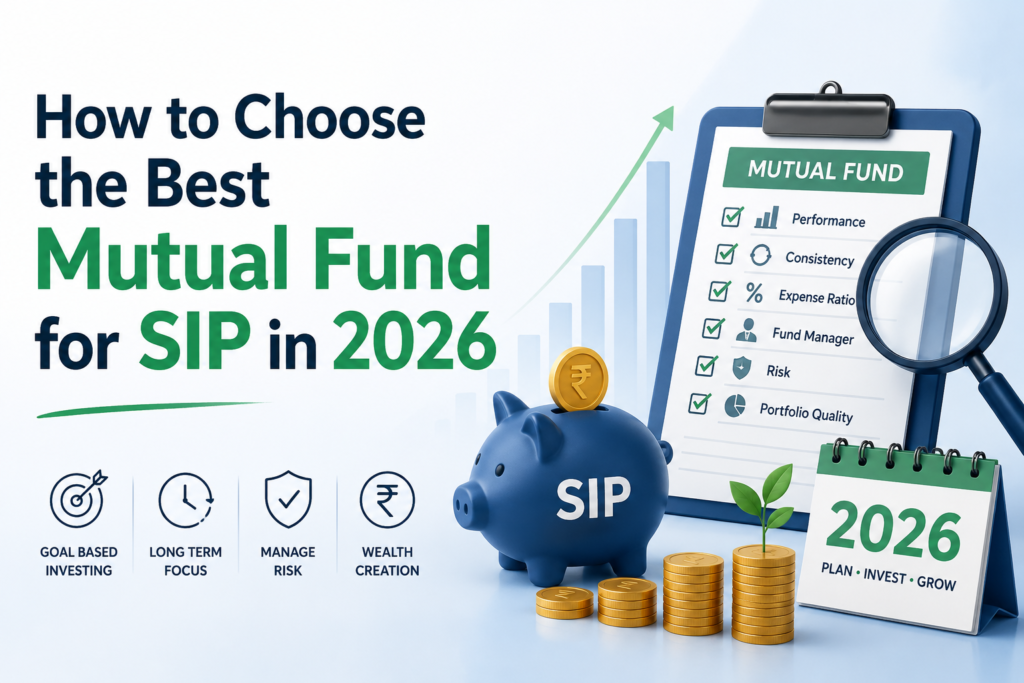
How to Choose the Best Mutual Fund for SIP in 2026

Very informative and well-researched list This article does a great job of explaining how choosing the right mutual funds for SIP in 2025 can help investors balance growth and risk over the long term. I especially like the focus on consistency, fund performance, and goal-based investing crucial points many beginners overlook.
With market conditions constantly evolving, having a disciplined SIP strategy backed by proper knowledge is essential. For readers who want to deepen their understanding of markets, trading, and smart investment decisions, I also share insights here: https://vaishviktrader.com/