

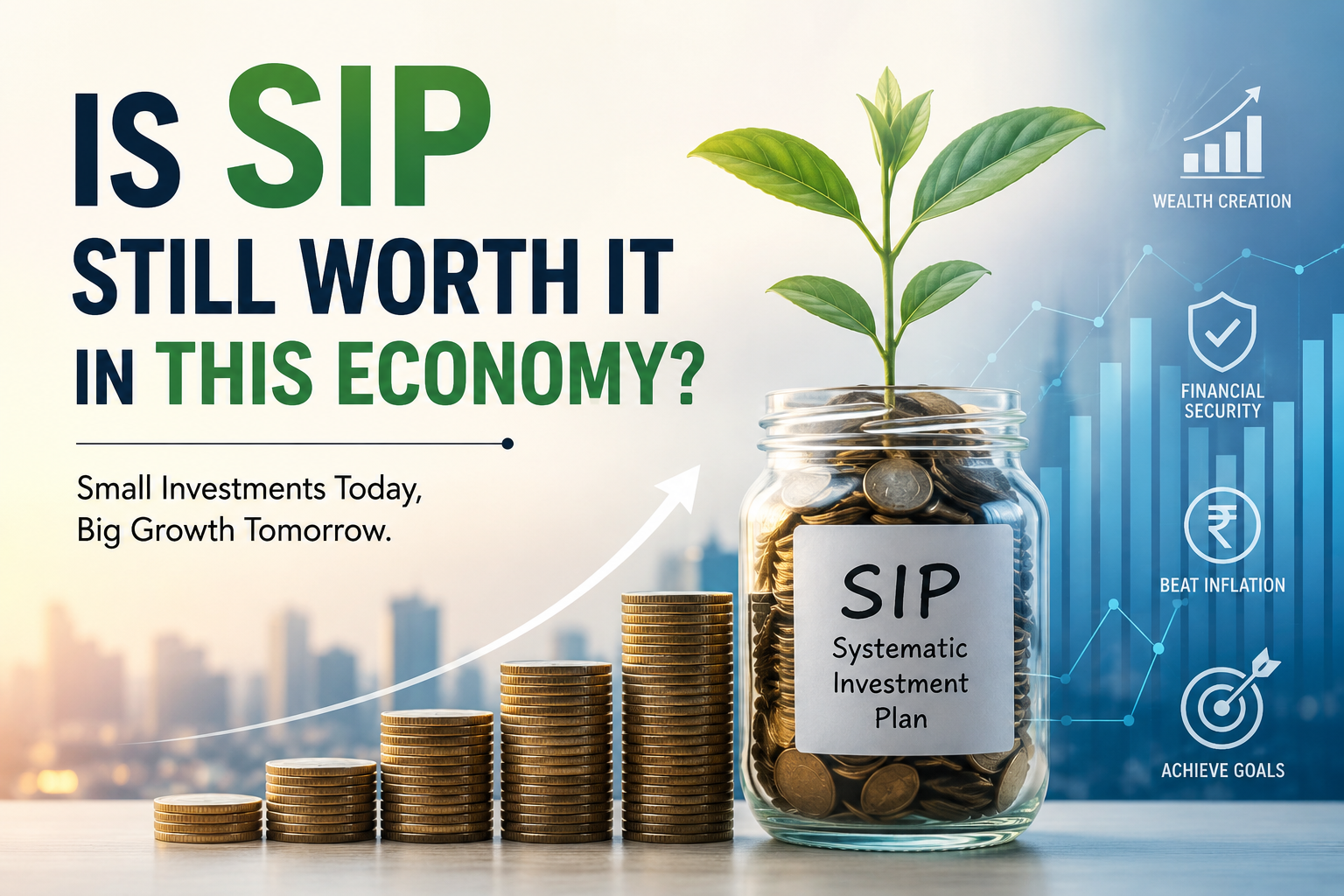
Prices are up. The news feels heavy. And every time you open Instagram, someone’s talking about market crashes or the next big investment trend. So it makes sense if you’ve started wondering, is SIP investment still a smart move right now, or should you just wait things out?
One of the most common questions investors ask today is, ‘Is SIP still worth it in this economy?‘
The short answer is yes—but understanding why can help you make better financial decisions. And honestly, the answer isn’t as complicated as the headlines make it sound.
Let’s talk about it properly. No jargon, no lecture, just a real conversation about what SIP investment actually means for your money in 2026.
Here’s the reworked version with subheadings and bullet points:
Understanding How SIPs Work
Let’s get into the actual mechanics, because once you understand this part, everything else about SIP investment makes a lot more sense.
The Basic Setup
When you start a SIP, you’re not handing over one big chunk of money. You’re committing to invest a fixed amount, say 2,000 rupees, on a fixed date every month, into a mutual fund you’ve chosen. That money buys units of the fund based on its price that day, known as the Net Asset Value, or NAV.
How Your Money Actually Grows
- NAV moves up and down with the market, just like a stock price does.
- When the market is down, your 2,000 rupees buys more units, because each unit is cheaper.
- When the market is up, your same 2,000 rupees buys fewer units, because each one costs more.
- Over time, this averages out your purchase price, so you’re not stuck buying everything at one peak price. This is called rupee cost averaging, and it’s the backbone of why SIPs work so well over the long run.
The Power of Compounding
- Every unit you own has the potential to grow.
- Any returns you earn get reinvested automatically, which means your money starts earning on its own earnings.
- This growth is barely noticeable in year one or two.
- Stretch it out to ten or fifteen years, and the growth curve starts looking a lot steeper than most people expect.
Why This Matters for You
None of this requires you to check the market from time to time or predict anything. Your SIP just runs quietly in the background every month, buying units regardless of what’s happening in the news that day. This consistency is the key and a very clever strategy that may actually build wealth over time.
Is SIP Worth It In Today’s Economy?
The simple answer is yes, but just “yes” without any context isn’t helpful. Let me explain everything carefully.
A Systematic Investment Plan, or SIP, is basically a way to invest a fixed amount in mutual funds every month, instead of putting in one big lump sum. Think of it like a gym membership for your money.
You show up regularly, you don’t skip months just because you had a rough week, and over time, the results show up whether you were paying attention or not.
One thing you should definitely know about tough economic phases. They actually work in your favour if you’re doing SIP investment the right way. When markets fall, your fixed monthly amount buys more units. When markets rise, those units are worth more.
This back and forth is called rupee cost averaging, and it’s one of the biggest reasons SIPs have stayed relevant through every kind of market cycle, good or bad.
So when people ask if SIP investment is worth it during inflation, job uncertainty, or a shaky economy, my honest take is this. The economy will always have ups and downs. That’s not new. What matters is whether you’re investing with a long enough time horizon to ride those waves out. If you’re investing for a goal that’s five, ten, or fifteen years away, short-term noise shouldn’t scare you off.
The people who lose out aren’t the ones who stayed invested. It’s the ones who panicked, stopped their SIPs, and pulled their money out right when the market was low. That’s the opposite of what you’re supposed to do.
Check out: Top Reasons This Is the Best App for SIP Investment (Everyone’s Switching)
SIP Investment Benefits: More Than Just Money
People often think sip investment benefits are just about the money you make at the end. But honestly, the psychological perks are just as valuable. We’re emotional creatures. When the market crashes, our instinct screams, “sell!” When it booms, we suddenly want to throw all our savings in at the top. Well, that’s actually a recipe for disaster.
So, let’s break down why SIPs have become the go-to choice for so many first-time investors in India.
- Rupee Cost Averaging (The Superpower)
This is the big one. When you invest a fixed amount regularly, you buy more units when the market is down and fewer when it’s up. Over time, this averages out your purchase price. It literally turns volatility into an ally. When the market dips, it’s not a loss—it’s a sale
- The Discipline Factor
We all know saving in this economy is hard. But a SIP automates it. The money leaves your account before you have a chance to spend it. It removes the “should I invest today?” debate. It forces you to be consistent, and in the world of investing, consistency beats intensity every time.
- Power of Compounding
This is the magic that happens when your returns start earning their own returns. The longer you stay invested, the more powerful this becomes. Starting early, even with a small amount, can lead to a massive corpus down the line.
- Accessibility for Everyone
People often think that I will invest in a SIP when I have enough money. But enough never comes. You don’t need to be a millionaire to start. You can begin a SIP investment with a surprisingly small amount, making it perfect for beginners who are just dipping their toes in the water.
- Remove the Emotional Guesswork
You’re not sitting there every day wondering if today is the right day to buy. Your SIP buys automatically, on schedule, regardless of what the market is doing that day. This alone saves people from some seriously bad decisions.
These sip investment benefits are exactly why so many financial advisors recommend it as a starting point. Especially for people who are new to investing and don’t want to spend hours studying the stock market.
SIP Investment Is Good or Bad? The Uncomfortable Truth
We need to address the elephant in the room. Is the SIP investment good or bad? Like any good financial tool, it has its nuances. It’s not a magic bullet. And it’s definitely not “set it and forget it” in the sense that you never need to check it.
Let’s look at the “bad” or, rather, the risks.
The Sequence of Returns Risk
This is a fancy term for a simple problem. Imagine you’ve been investing for 15 years. You’ve built up a huge corpus. Right before you plan to withdraw, the market crashes. Your “average” cost might have been low, but your final value is hammered because the crash happens at the wrong time. The final phase of your SIP is critical.
The Math vs. The Reality
Mathematically, a lump sum investment (if you have the money upfront) often beats a SIP over the long term because your money has more time to compound. SIPs are about averaging, but that means you might miss out on some gains if the market goes straight up.
Behavioural Mistakes
Here’s the kicker—stopping your SIP when the market crashes completely defeats the purpose. A study showed that investors often earn less than the fund itself because they panic and redeem at the worst times. If you stop your SIP in a downturn, you are locking in a loss and missing out on the cheap units that will fuel your recovery.
SIP Investment for Beginners: Let’s Demystify This
If you’re new to this, sip investment for beginners can seem daunting. It sounds like financial jargon, but it’s incredibly simple. Let’s break it down step-by-step because SIP investment is the perfect starting point for building wealth.
Figure out your goal
Are you saving for a house down payment, your child’s education, retirement, or just building wealth in general? Your goal decides your time horizon, and your time horizon decides which type of mutual fund suits you. This is the first real step in sip investment for beginners, and skipping it is one of the most common mistakes people make.
Obsessing over the best fund
Don’t obsess over picking the “best” fund. I know that sounds counterintuitive coming from a finance blog, but hear me out. A decent, well-reviewed fund that you stick with for ten years will beat a “perfect” fund that you keep switching out of every year because you saw a better return somewhere else. Consistency beats perfection here.
Start small
SIP investment for beginners doesn’t mean you need to commit a huge chunk of your salary from day one. Start with an amount that feels comfortable, even if it’s just a few hundred rupees. You can always increase it later through what’s called a step-up SIP, where your contribution grows automatically each year.
Understand the difference between equity, debt, and hybrid funds
Equity funds invest mostly in stocks and carry more risk but higher potential returns over time. Debt funds are safer but grow slower. Hybrid funds sit somewhere in the middle. If you’re just starting out and your goal is more than five years away, equity funds are usually where beginners are guided toward, but talk to an advisor if you’re unsure.
Don’t check your portfolio every single day
I know it’s tempting, especially when you’re new and excited. But daily market movements will only stress you out and tempt you into decisions you’ll regret. Check in monthly or quarterly instead.
If you keep these basics in mind, sip investment stops feeling intimidating and starts feeling like something you can actually manage on your own.
How to sip Investment: A Step-by-Step Guide
So, you’re ready to start? Wondering how to sip investment actually happens? It’s way easier than you think. You don’t need a broker or a pile of forms. Here’s the modern, streamlined process.
- Complete Your KYC
This is the mandatory paperwork. You need your PAN card and Aadhaar card. Most platforms allow you to do this digitally with e-KYC—it takes minutes. If you’ve already done it for a bank account, you might be halfway there.
- Link Your Bank Account
You’ll need to set up a mandate. This is just an instruction to your bank to allow the fund house to auto-debit a specific amount on a specific date.
- Choose Your Fund
This is where it gets personal. Are you investing for a goal 10+ years away? Look at equity funds. If you’re risk-averse or have a short-term goal, debt or hybrid funds might be better. For beginners, sticking to diversified, large-cap, or index funds is a safe bet—avoid sector-specific funds until you know what you’re doing.
- Decide the Amount and Date
Set an amount you are comfortable with. It’s okay to start small. For SIP investment for beginners, many experts suggest starting with as little as ₹500 to ₹1,000 just to build the habit. Also, set the date a few days after your salary credits so you know the money is there.
- Hit Submit
That’s it. Once you submit your SIP investment online, the system takes over. It’s automated, it’s simple, and it’s the most powerful step you can take.
SIP Investment Online: Why It’s Easier Than You Think
A few years ago, starting a SIP meant paperwork, physical visits to a bank or an agent, and a lot of waiting around. That’s not the case anymore.
Doing sip investment online today takes maybe fifteen minutes, sometimes less if your KYC is already done. Most fund houses and investment apps let you complete your entire KYC digitally now, using your PAN, Aadhaar, and a quick video verification. No more standing in queues or filling out ten different forms by hand.
Once your KYC is sorted, setting up a SIP investment usually looks like this:
- pick a fund
- choose your monthly amount
- select your auto-debit date
- link your bank account
And that’s it. The money gets deducted automatically every month, and you can track your portfolio right from the app whenever you want.
Platforms like Groww, Zerodha Coin, Paytm Money, and the direct websites of AMCs like HDFC Mutual Fund or SBI Mutual Fund all offer sip investment online. If you already have an account with HDFC Mutual Fund or ICICI Prudential Mutual Fund, logging in and starting a SIP takes just a few clicks.
The convenience of sip investment online has honestly changed how people in India approach investing. It’s no longer something you put off because it feels complicated or time-consuming. You can literally set it up during a lunch break and forget about it until your next review.
So, What Should You Do Right Now?
Honestly? Stick with it.
One of the biggest mistakes you can make is stopping your SIP when the market looks ugly. Remember, when markets are down, your SIP is buying more units. You’re accumulating wealth at a discount. If you stop now, you’re essentially breaking the very mechanism that makes SIPs so powerful.
Look at the data. An investor who stayed invested through the 2020 COVID crash saw phenomenal returns. Someone who panicked and redeemed locked in their losses. Over a 15-year period, SIPs have a massive chance of delivering positive, inflation-beating returns .
Yes, the economy feels weird. Yes, there’s uncertainty. But that is exactly why tools like SIPs were invented—to help us navigate the chaos without losing our minds. Don’t let a few negative headlines derail your long-term goals.
The best time to start a SIP was yesterday. The second best time is right now. And the worst time? That’s when the market is at its peak and everyone is shouting about how easy the money is.
Stay calm. Stay consistent. Keep investing. And don’t worry, you’ve got this.
Related Posts

SIP vs. Mutual Funds: Key Differences, Benefits, and Which Is Better in 2026

Best SIP Plan for Under ₹1000 in India (2026): Top Mutual Funds, SBI SIP Plans & Beginner’s Guide